Artificial Intelligence and Education: How AI Helps Children Learn and Develop Skills
AI has become a powerful tool for improving the quality of education for children. Advanced educational technologies do not only help to make the process more interesting and interactive but also adapt it to the individual needs of each pupil.
Artificial intelligence opens up new horizons for children's skill development: for language learning, there are chatbots that can hold conversations in a foreign language, helping children to practice their speaking skills and improve their pronunciation; AI-based programs can teach children to analyze data, identify patterns and draw valid conclusions, helping to develop analytical skills and critical thinking; many AI-based programs and games teach children the basics of programming, which develops logical thinking.
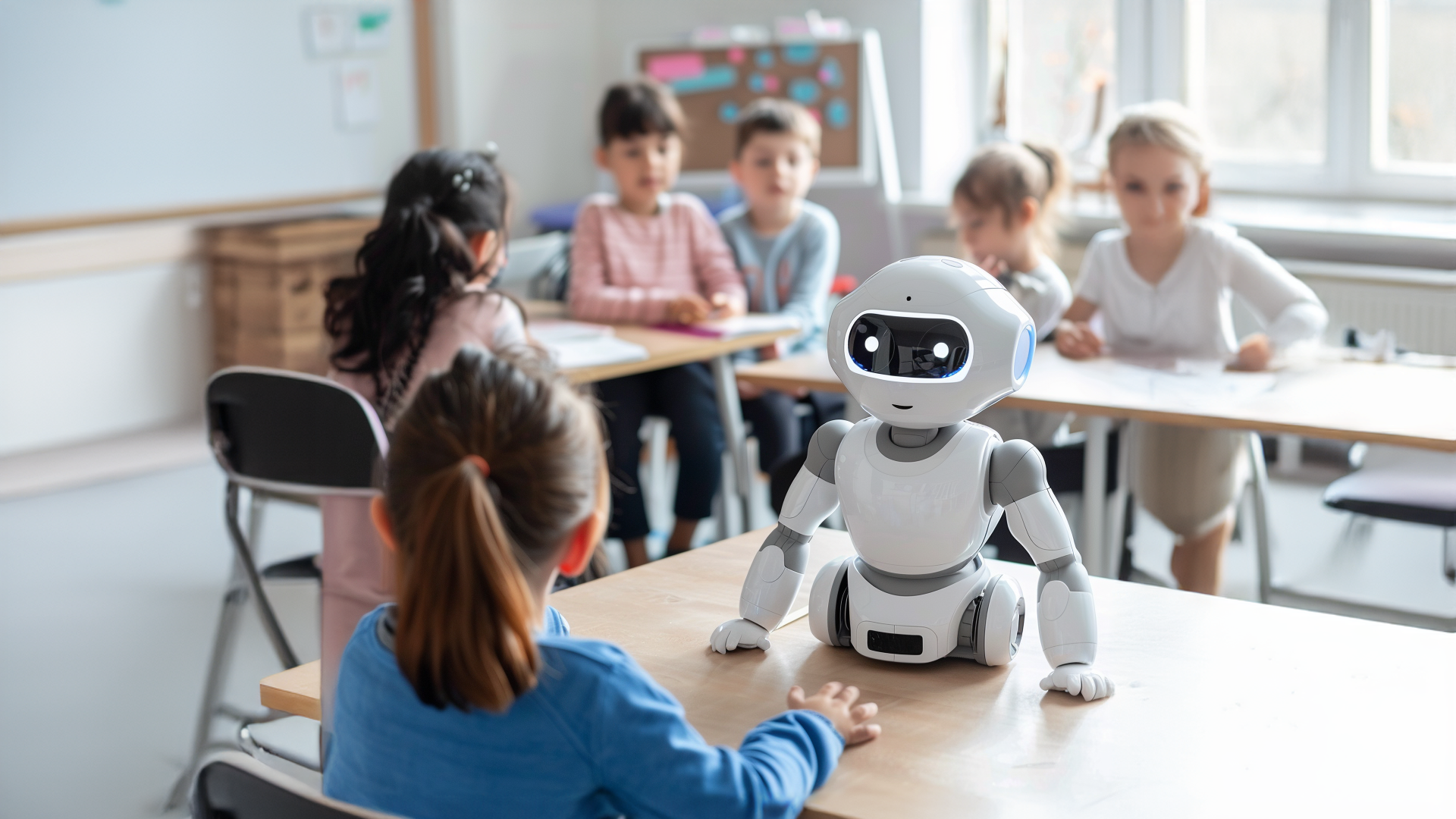
Interactive Learning Materials
AI technologies are continually contributing to traditional methods with interactive educational applications and games that help make the learning process more engaging. Children can solve problems, pass quests and get instant feedback. This is particularly effective in the younger grades, where the game format helps to keep a child's attention.
Tailored Material for Individual Pupil Needs
AI allows you to create personalized learning programs that consider a child's knowledge level, interests and personal traits. For example, AI algorithms can predict which topics might be difficult for a pupil and suggest appropriate supporting materials for the most challenging tasks. Moreover, some AI technologies can also analyze a child's facial expressions and tone of voice to determine his or her emotional state and adapt the learning process accordingly.
AI as an Online Tutor
AI technologies can create virtual tutors which can help children understand difficult topics, answer their questions in real time, provide additional explanations and even check homework.
Supporting Inclusive Education
AI helps to create adaptive learning programs for children with special educational needs, ensuring that they have an equal opportunity to learn.
In this way, Artificial Intelligence (AI) is becoming an integral part of modern education, offering new opportunities to improve learning experience: in science, AI-powered virtual laboratories and simulations are created to allow experiments and scientific phenomena to be studied without the need for expensive equipment; the combination of Virtual Reality (VR) and Artificial Intelligence allows creation of unique educational environments to study such subjects as history or biology, immersing pupils in interactive worlds; in art, AI can be used to create musical compositions, paint pictures, and help children develop their creativity.
But while AI offers many opportunities, it also requires thinking about how this integration affects development of a child. It is understood that such technologies must be used in harmony with traditional teaching methods and under the supervision of educators to ensure children's safe and healthy development.